The government’s “2026 Economic Growth Strategy” is reshaping the safety management paradigm across industrial sites
The core message is clear.
Generous tax incentives will be provided for the adoption of safety facilities leveraging new technologies such as AI,
while severe penalties—at a level that could threaten corporate survival—will be imposed for violations of safety obligations.
This policy is not a recommendation.
By presenting both clear incentives for safety investment and devastating penalties in the event of accidents,
the government is making safety investment a mandatory requirement rather than an optional choice for companies.
Three Key Pillars of the Policy
-
Three-Tier Tax Incentive Package
Expansion of tax credits up to 12–40% for investments in AI-powered safety facilities
(R&D tax credit rates: General 2–25%, New Growth & Core Technologies 20–40% / Investment tax credit rates: General 1–10%, New Growth & Core Technologies 3–12%)
-
Stronger Accountability
Introduction of new penalty fines equivalent to 5% of operating profit or 3% of revenue in the event of fatal accidents
(Legislation and amendments planned for the first half of 2026)
-
Intensified Oversight
Expansion of industrial safety inspectors to 2,095 personnel and introduction of restricted bidding for high-risk construction projects
Safety Investment Is Now State-Supported
The government has begun recognizing AI-based safety facilities as “New Growth & Core Technologies.”
This signals more than regulatory relaxation—it reflects a shift in perception,
where safety technology investment is now regarded as a core pillar of national competitiveness.
- AI Monitoring Systems Included in Integrated Investment Tax Credits
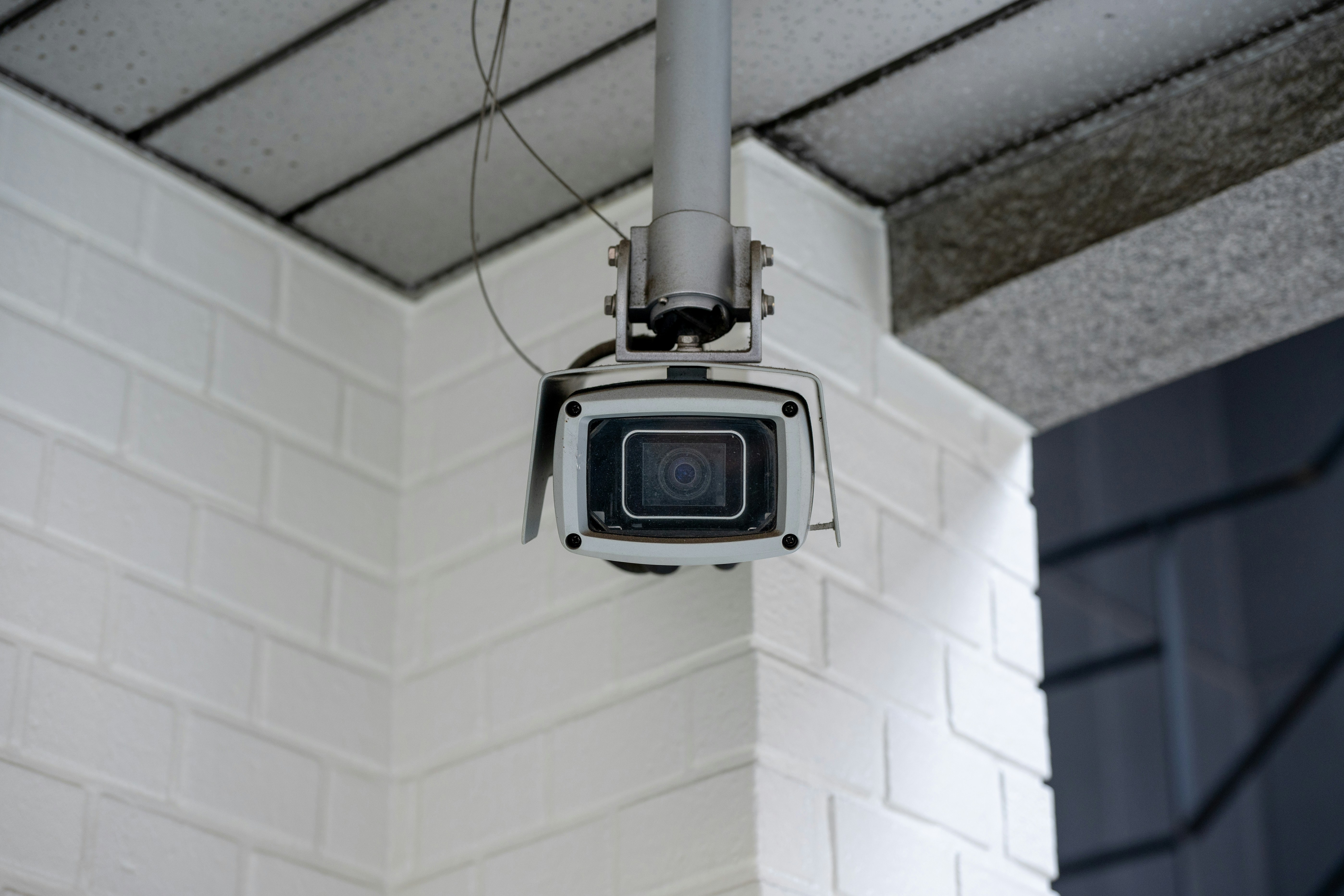
Tax credit eligibility is significantly expanded to include AI-powered intelligent CCTV monitoring systems,
even beyond legally mandated facilities.
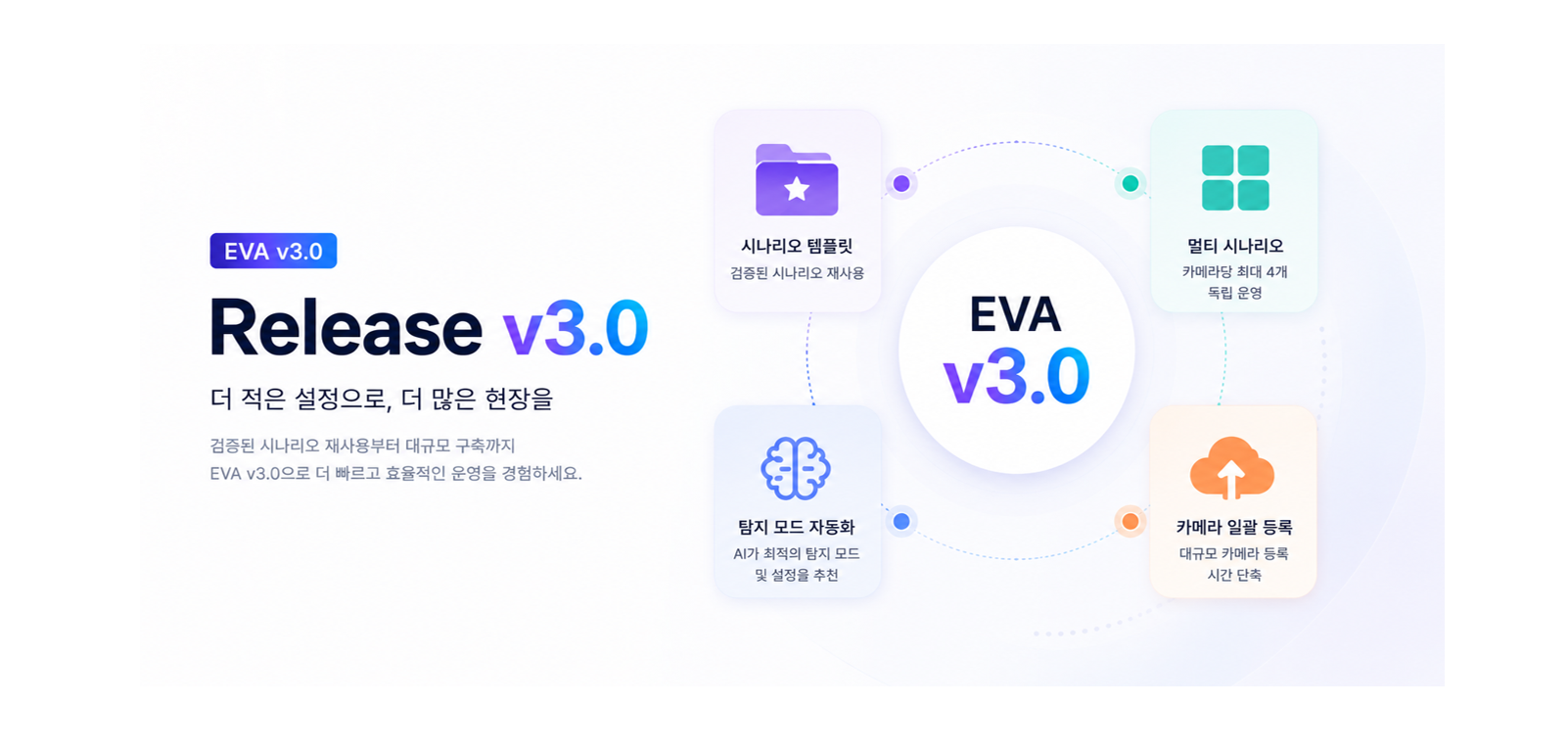
The EVA solution represents the standard for next-generation safety facilities recommended by the government.
- Preferential Treatment for R&D and Facility Investments Under New Growth & Core Technology Designation
Investments in advanced safety technologies utilizing AI and robotics are eligible for tax credits
ranging from up to 12% for facilities to 40% for R&D.
(R&D tax credit rates: General 2–25%, New Growth & Core Technologies 20–40% / Investment tax credit rates: General 1–10%, New Growth & Core Technologies 3–12%)
Now is the optimal time to deploy high-performance EVA solutions at the lowest possible cost.
A Single Accident Can Undermine an Entire Company
Regulatory scrutiny has become significantly more stringent.
The introduction of a punitive penalty framework starting in 2026 makes reactive, after-the-fact responses no longer viable.
- Penalty fines of 5% of operating profit or 3% of revenue in the event of fatal accidents (cap: KRW 100 billion)
Under amendments to the Occupational Safety and Health Act and the Construction Safety Special Act,
companies facing repeated fatal accidents may be fined up to 5% of operating profit or 3% of revenue
(legislation and amendments planned for the first half of 2026).
This goes beyond a simple fine—it poses a direct threat to corporate management and sustainability.
EVA intelligently monitors worksites 24/7, proactively identifying and blocking fleeting risk factors that human operators are likely to miss.
Accident prevention is now the most reliable cost-saving strategy.
Why EVA: A Full-Stack AI Safety Solution
More than just an AI solution, EVA delivers a full-stack AI experience optimized for each customer’s business environment.
Enjoy unparalleled operational efficiency and flexibility—free from dependence on any single technology stack.
1. Freedom to Choose AI Models Optimized for Your Environment
Select the AI stack best suited to your operational environment while maintaining powerful safety monitoring performance.
Global leading AI models such as HyperCLOVA X, Qwen, Gemma, LLaMA, ChatGPT, and EXAONE,
along with cutting-edge vision models including ultralytics YOLO, OWL-ViT, RT-DETR, and OmDet,
can all be freely deployed on the EVA platform.
2. One-Quarter of the Total Cost of Ownership (TCO) Compared to Competitors
High deployment costs and slow maintenance hinder growth.
EVA delivers overwhelming cost efficiency—from initial investment through ongoing operations.
| Comparison Criteria | mellerikat EVA | Conventional AI CCTV Solutions |
|---|
| Initial server requirements (100 CCTV cameras) | 1 high-performance GPU server (NVIDIA L40S), initial cost approx. KRW 25M | 4 high-performance GPU servers (NVIDIA L40S), initial cost approx. KRW 100M |
| Additional cost for scenario changes | No additional license required, no ongoing maintenance cost | Additional cost for every scenario change, approx. KRW 200K per update |
| Scenario configuration & modification | Directly editable by operators, under 30 seconds | Requires specialized personnel, approx. 1–2 weeks |
Now Is the Right Time. Let EVA Be Your Trusted Safety Partner.